
Published: 6 Jul 2026
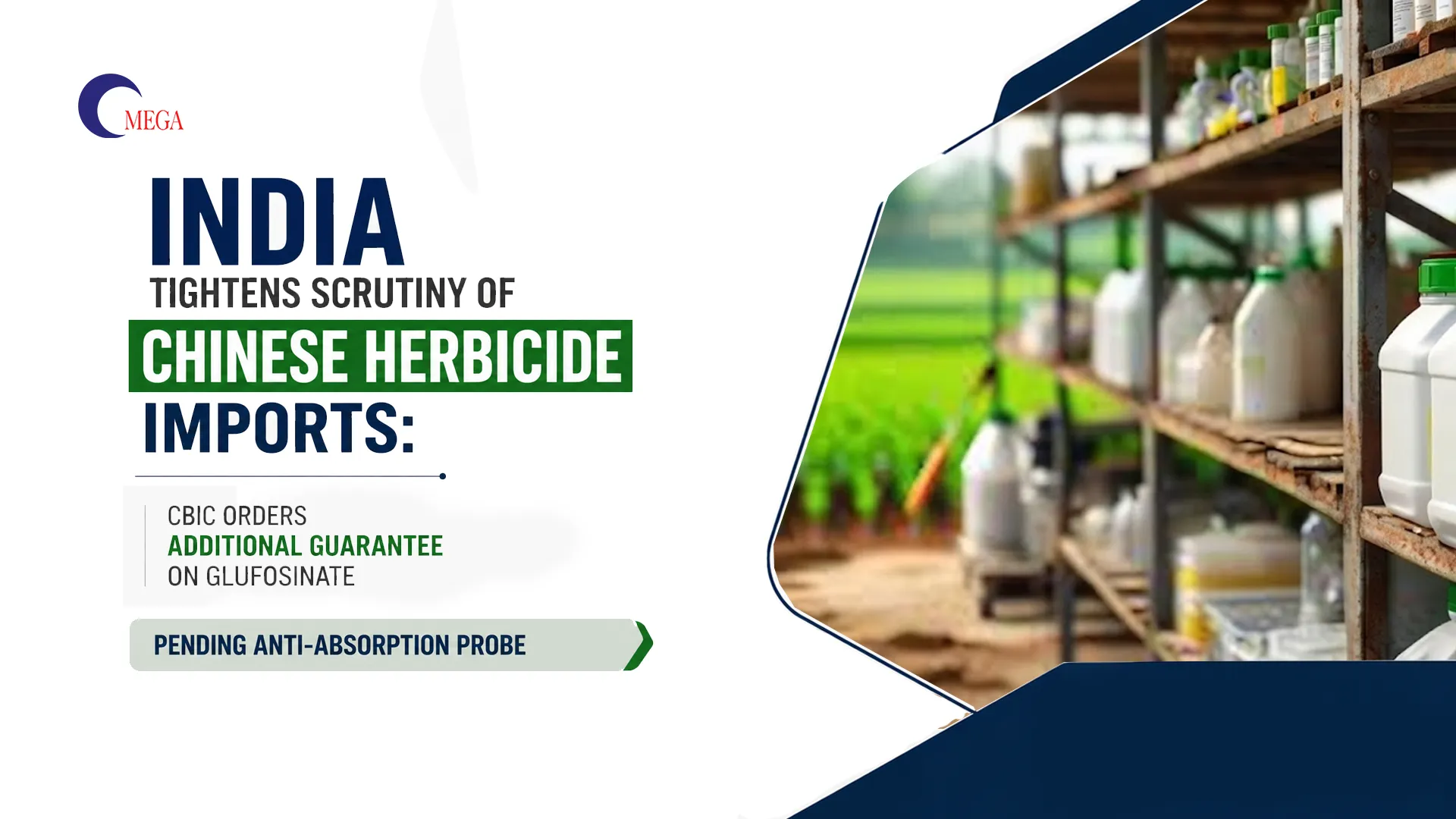
India Tightens Scrutiny of Chinese Herbicide Imports: CBIC Orders Additional Guarantee on Glufosinate Pending Anti-Absorption Probe
Omega QMS Compliance Insights
Omega QMS
Regulatory advisory | BIS CRS Scheme-II | July 2026
India has further strengthened its trade enforcement measures by introducing additional safeguards on Glufosinate and its salts imported from China. As per CBIC Instruction No. 13/2026-Customs dated 3 July 2026, customs authorities across India have been directed to undertake provisional assessment of imports and obtain an additional guarantee of USD 7.04 per kilogram from importers while the Directorate General of Trade Remedies (DGTR) completes its anti-absorption investigation.
The move highlights India’s increasing focus on customs compliance, trade remedies, and the effective implementation of anti-dumping duty regulations to ensure fair competition in the domestic market.
What is Glufosinate and Why Does It Matter?
Glufosinate is a broad-spectrum herbicide widely used in Indian agriculture for effective weed control across a variety of crops. Given its importance to the agrochemical sector, imports of Glufosinate have been closely monitored by Indian trade authorities.
Following an investigation by the Directorate General of Trade Remedies (DGTR), the Government of India imposed an anti-dumping duty of USD 2,998 per metric tonne on imports of Glufosinate and its salts originating in or exported from China through Notification No. 09/2025-Customs (ADD), effective from 8 May 2025. The investigation concluded that dumped imports were causing material injury to the domestic industry.
Understanding the Anti-Absorption Investigation
Anti-dumping duties are intended to restore fair competition by eliminating the pricing advantage enjoyed by unfairly dumped imports.
However, these duties become less effective if exporters absorb the duty by reducing their export prices instead of passing the additional cost on to buyers. In such cases, imported products continue entering the market at artificially low prices, undermining the protection intended for domestic manufacturers.
Based on allegations from the domestic industry, the DGTR initiated an anti-absorption review investigation on 2 March 2026 (F. No. 7/02/2026-DGTR) to determine whether Chinese exporters were neutralizing the existing anti-dumping duty through duty absorption.
CBIC’s Latest Directions
Acting under Notification No. 14/2026-Customs (ADD), CBIC has directed customs formations across the country to implement the following interim measures:
- Subject imports of Glufosinate and its salts originating in or exported from China to provisional assessment until the Central Government takes a final decision under Rule 31(3) of the Anti-Dumping Rules.
- Obtain an additional guarantee of USD 7.04 per kilogram from importers based on the DGTR’s prima facie assessment of the duty absorption amount.
- Apply this guarantee requirement retrospectively from 2 March 2026, the date on which the anti-absorption investigation commenced.
- Ensure compliance with DGFT Notification No. 10/2026-27 dated 13 April 2026, preventing imports below the notified Minimum Import Price (MIP).
- Continue levying the existing anti-dumping duty under Notification No. 09/2025-Customs (ADD) in addition to the new guarantee requirement.
These measures are provisional and will remain in force until the anti-absorption investigation reaches its conclusion.
Domestic Industry Behind the Complaint
The anti-absorption review was initiated following a joint application by leading Indian agrochemical manufacturers:
- Superform Chemicals
- UPL Ltd
- Astral Life India
- United Phosphorus (India) LLP
- UPL Sustainable Agri Solutions
The applicants alleged that Chinese exporters were absorbing the existing anti-dumping duty by lowering export prices, thereby diminishing the effectiveness of India’s trade remedy measures.
Business Impact: What Importers Should Know
The latest CBIC Notification 2026 has immediate commercial implications for businesses importing agrochemicals from China.
Importers must now furnish an additional guarantee of USD 7.04 per kilogram, increasing working capital requirements and affecting cash flow during the provisional assessment period.
The interim safeguard helps preserve the effectiveness of India’s anti-dumping framework while the DGTR completes its investigation.
Businesses importing Glufosinate must now comply with multiple regulatory requirements simultaneously:
- Existing anti-dumping duty.
- Additional provisional guarantee.
- Minimum Import Price (MIP) requirements.
Importers should review supplier pricing, customs valuation, and import documentation to ensure continued customs compliance.
The Glufosinate action reflects a broader trend in India’s trade enforcement strategy. On the same day, CBIC also issued Instruction No. 12/2026-Customs imposing similar anti-absorption provisional measures on Insoluble Sulphur imports from China, signalling increased regulatory scrutiny across chemical imports.
Key Compliance Takeaways
Businesses importing Glufosinate from China should note the following:
- The existing anti-dumping duty of USD 2,998 per metric tonne continues to apply.
- Importers must now furnish an additional guarantee of USD 7.04 per kilogram during provisional assessment.
- The guarantee requirement applies retrospectively from 2 March 2026.
- Customs authorities will also ensure compliance with the applicable Minimum Import Price (MIP) before allowing clearance.
- Importers should closely monitor ongoing DGTR proceedings and evaluate the financial impact of these interim measures.
What Happens Next?
The current guarantee requirement is an interim safeguard and does not represent the final outcome of the anti-absorption investigation.
Once the DGTR completes its review, it will submit its final findings to the Central Government. Based on those findings, the Government may decide under Rule 31(3) of the Anti-Dumping Rules whether the existing anti-dumping duty should be revised or permanently increased.
Until then, imports of Glufosinate and its salts from China will continue to be subject to provisional assessment and the additional guarantee requirement.
Conclusion
India’s latest action demonstrates its commitment to strengthening Anti-Dumping Duty enforcement and preventing circumvention through duty absorption. The combined application of anti-dumping duties, provisional guarantees, and Minimum Import Price requirements reflects a more robust regulatory approach towards chemical imports.
For importers, distributors, and manufacturers, staying informed about evolving CBIC notifications, DGTR investigations, and trade remedy measures is essential to ensure uninterrupted business operations and regulatory compliance.
How Omega QMS Can Help
Keeping pace with evolving customs regulations, trade remedy investigations, and The latest CBIC Notification 2026 has immediate commercial implications for businesses importing agrochemicals from China. can be challenging for businesses engaged in international trade.
At Omega QMS, we help organizations navigate complex regulatory requirements by providing expert guidance on customs compliance, DGTR proceedings, BIS certification, import regulations, and other trade-related obligations.
If your business imports regulated products or requires support in understanding the implications of CBIC notifications, anti-dumping duties, or other import compliance requirements, our experts are ready to assist you with practical, reliable, and timely compliance solutions.
Importing Glufosinate or Other Chemicals from China?
Need help with provisional assessment, guarantee or anti-dumping compliance?
Sources
Primary Sources
- CBIC Instruction No. 13/2026-Customs, dated 03 July 2026.
- Notification No. 14/2026-Customs (ADD), dated 03 July 2026.
- Notification No. 09/2025-Customs (ADD), dated 08 May 2025.
Secondary Source
The Economic Times
India Tightens Scrutiny of Chinese Herbicide Imports: CBIC Orders Additional Guarantee on Glufosinate Pending Anti-Absorption Probe
Published: 05 July 2026