
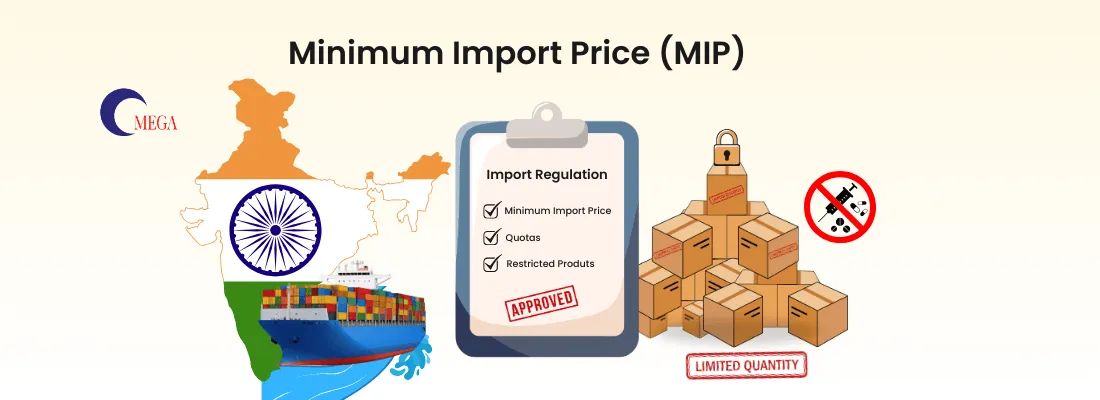
Minimum Import Price (MIP), Quotas, and Restricted Product Management in India
India’s trade policy framework is designed to encourage fair competition while protecting domestic industries from sudden market disruptions. As a result, certain imports are regulated through mechanisms such as Minimum Import Price (MIP) requirements, Tariff Rate Quotas (TRQs), and restricted or prohibited import classifications.
For businesses importing into India, these controls are not unusual—but they do require careful planning, accurate interpretation of policy notifications, and alignment between commercial decisions and regulatory obligations.
Minimum Import Price (MIP): Preventing Under-Valued Imports
Minimum Import Price (MIP) is imposed on selected goods to prevent low-priced imports from adversely affecting domestic manufacturers. Under MIP regulations, imports below a government-notified price are not allowed, even if customs duties are paid.
MIP is typically introduced during periods of market stress or when domestic industries face price pressure from overseas suppliers. Products that have historically been subject to MIP include steel products, certain chemicals, electronic components, and consumer goods.
For importers, MIP compliance goes beyond invoice value. Authorities may review:
- Transaction value and pricing structure
- Related-party transactions
- Discounts, rebates, or bundled pricing
- Supporting commercial contracts and payment terms
Incorrect pricing or insufficient documentation can lead to cargo being held at ports, demands for revaluation, or outright denial of clearance.
Tariff Rate Quotas (TRQs): Limited Quantities, Time-Sensitive Decisions
Tariff Rate Quotas (TRQs) allow imports of specified goods at a reduced or concessional customs duty up to a defined quantity. Once the quota is exhausted, imports are permitted only at higher duty rates.
TRQs are commonly applied to agricultural products, raw materials, and essential commodities where the government seeks to balance domestic supply with import dependence.
Managing imports under TRQs requires:
- Advance estimation of annual or seasonal requirements
- Timely application for quota allocation
- Monitoring quota utilisation at a national level
- Coordination between procurement, logistics, and customs teams
Missing a quota window or miscalculating volumes can significantly impact landed cost and supply chain planning.
Restricted and Prohibited Products: Compliance through Strategy
India’s Foreign Trade Policy categorises certain products as restricted or prohibited. While prohibited goods are generally not permitted for import, restricted products may be imported with prior approvals and authorisations.
Importing restricted goods often involves:
- Obtaining special import authorisations from DGFT or sector-specific authorities
- Seeking policy exemptions or relaxations based on end-use, project-specific needs, or public interest
- Aligning pricing strategies with customs valuation rules and policy conditions
- Demonstrating compliance with safety, quality, or technical regulations
Each restricted product category has its own compliance pathway, and a one-size-fits-all approach rarely works.
Why Import Control Compliance Is Often Challenging
One of the key challenges importers face is the dynamic nature of India’s trade regulations. MIP thresholds can change, quotas may be revised mid-year, and product classifications can move between free, restricted, and prohibited categories.
Additionally, interpretations may differ between policy authorities and customs officials at ports. Without proper planning and documentation, even compliant shipments can face delays or disputes.
Role of Omega QMS
Omega QMS works closely with businesses to help them navigate MIP requirements, quota mechanisms, and restricted product regulations in a structured and compliant manner. This includes evaluating product eligibility, reviewing pricing and documentation, supporting authorisation applications, and aligning import strategies with current trade policy provisions. The approach is focused on reducing regulatory uncertainty while ensuring imports move smoothly through the Indian system.
Conclusion
MIP rules, quotas, and restricted import regulations are not intended to block trade—but they do require careful understanding and proactive management. With the right regulatory planning, businesses can minimise risk, control costs, and maintain continuity in their import operations.
Connect with Us to understand how Minimum Import Price rules, quotas, or restricted import regulations apply to your products and how to plan compliance effectively.