Published: 27 Jan 2026
SCOMET Authorisation and Export Control Compliance in India
Omega QMS Compliance Insights
Omega QMS
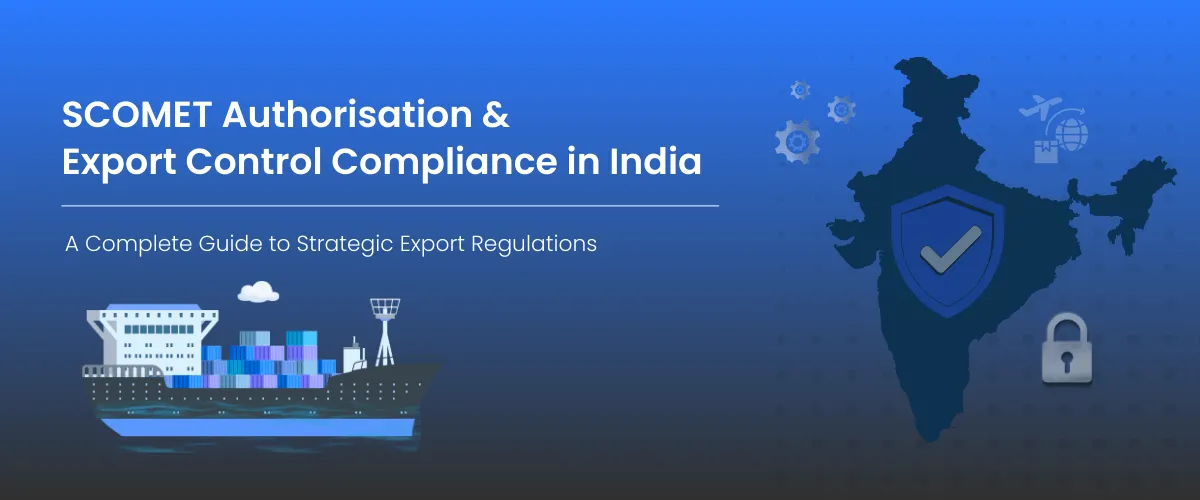
India’s export control framework plays a critical role in ensuring that sensitive goods and technologies do not fall into the wrong hands. One of the key pillars of this framework is SCOMET, which stands for Special Chemicals, Organisms, Materials, Equipment, and Technologies. These regulations govern the export of items that may have both civilian and strategic or military applications, often referred to as dual-use items.
For exporters, SCOMET compliance is not optional. Even unintentional violations can lead to serious legal and commercial consequences.
What Falls Under SCOMET?
SCOMET covers a wide range of products and technologies, including:
- Speciality chemicals and biological materials
- Advanced materials and alloys
- Precision equipment and manufacturing tools
- Electronics, sensors, and aerospace components
- Technical data, drawings, and software related to controlled items
Many exporters are surprised to learn that everyday industrial products or technical know-how may fall under SCOMET due to their potential strategic use.
Why SCOMET Compliance Is Often Overlooked
SCOMET compliance challenges usually arise from lack of awareness rather than deliberate non-compliance. Product classifications can be technical, and SCOMET entries are detailed and nuanced. Additionally, exports of technology, design files, or even emails containing technical information may trigger compliance obligations.
Without proper assessment, exporters risk shipping controlled items without the required authorization.
Prior Export Authorization: A Mandatory Requirement
If a product or technology falls under the SCOMET list, prior export authorization from DGFT is required before shipment. This approval process involves detailed disclosures related to the product, its specifications, destination country, and the parties involved.
Exporting without authorization, even once, can result in:
- Heavy penalties
- Suspension or cancellation of export licenses
- Blacklisting of exporters
- Long-term reputational damage
End-User and End-Use Verification
A key aspect of SCOMET compliance is verifying who the end user is and how the product will be used. Authorities closely examine whether the exported item could be diverted for unintended or restricted purposes.
Exporters are typically required to:
- Obtain end-user certificates
- Verify customer background and ownership
- Assess the stated end use for consistency and credibility
This step is critical, especially when exporting to sensitive regions or unfamiliar customers.
Internal Export Control Programs (IECP)
SCOMET compliance is not limited to obtaining approvals—it also requires internal systems and controls. An Internal Export Control Program (IECP) helps organizations identify, assess, and manage export control risks.
An effective IECP usually includes:
- Product classification procedures
- Customer and country screening
- Internal approval workflows
- Employee training and awareness
- Escalation mechanisms for potential red flags
Such programs demonstrate a company’s commitment to compliance and reduce the risk of accidental violations.
Record-Keeping and Audit Readiness
Exporters are required to maintain detailed records of SCOMET-related transactions, including authorizations, correspondence, contracts, and shipping documents. These records must be readily available for inspection or audit by authorities.
Strong record-keeping not only ensures compliance but also protects exporters in case of regulatory scrutiny.
Consequences of Non-Compliance
Non-compliance with SCOMET regulations can have far-reaching consequences beyond monetary penalties. It can disrupt export operations, impact future approvals, and affect relationships with customers and government authorities.
In sensitive industries, compliance failures can also harm long-term credibility in global markets.
Role of Omega QMS
Omega QMS assists exporters in understanding and managing SCOMET compliance through structured product classification, authorization support, and export control advisory. This includes helping businesses assess whether items fall under SCOMET, preparing authorization applications, supporting end-user verification processes, and strengthening internal compliance systems. The focus remains on practical compliance aligned with India’s export control framework.
Conclusion
SCOMET regulations exist to balance legitimate trade with national and global security concerns. With proper planning, awareness, and internal controls, exporters can meet these obligations without disrupting their business.
Not Sure Whether Your Exports Fall Under SCOMET?
Connect with Us to understand whether your products, technologies, or exports fall under SCOMET regulations, and to manage authorization and compliance requirements effectively.