Published: 23 Jun 2026
Draft Ecomark Criteria 2026: A New Era of Green Compliance for Indian Industry
Omega QMS Compliance Insights
Omega QMS
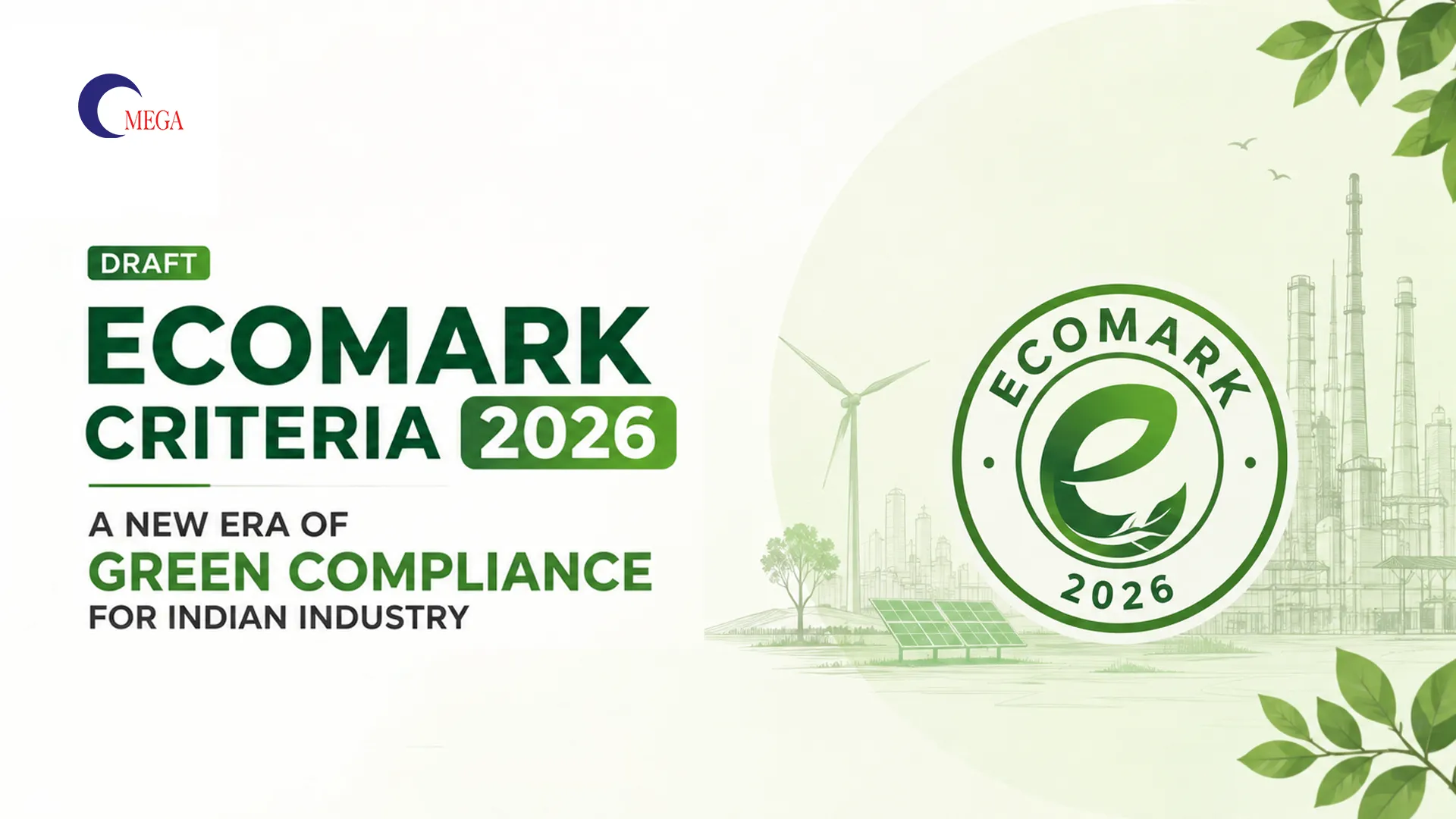
The Ministry of Environment, Forest and Climate Change (MoEFCC) has put out draft amendments to the Ecomark criteria for public consultation under the Ecomark Rules, 2024. For paints, batteries, paper products and wood substitutes, sustainability is moving from nice-to-have to non-negotiable.
What Is Ecomark?
Ecomark is India’s eco-labelling scheme. It identifies products that meet both quality and environmental performance standards. To qualify, a product must first comply with applicable BIS standards or Quality Control Orders (QCOs). Then it must satisfy the environmental criteria laid out under the Ecomark Rules, 2024.
The revised framework shows where India is headed: circular economy principles, resource efficiency, pollution control and responsible manufacturing are all converging into a single compliance architecture.
What’s Changing Across the Four Categories
Paints, Varnishes & Powder Coatings
Strict VOC limits, heavy metal bans, PFAS/PCB restrictions, mandatory ISO 14001 and recyclable packaging. Paint manufacturers should expect real reformulation work and supply chain reviews before qualifying.
Batteries
EPR registration, mercury and cadmium limits, recycled lead content requirements and mandatory ISO 14001. Battery manufacturers need stronger EPR systems and documented recycling processes to stay eligible.
Paper & Paperboard Products
Recycled fibre sourcing, chlorine-free bleaching, Life Cycle Assessment requirements and online continuous effluent monitoring. Paper manufacturers should plan investment in wastewater treatment and sustainability reporting.
Wood Substitutes, Furniture Panels & Engineered Wood
Certified forestry sourcing, formaldehyde emission limits, raw material traceability and LCA reporting. Plywood, MDF, HDF, particle board and furniture manufacturers may need to rethink sourcing and chemical formulations.
Key Requirements: Paints, Varnishes & Powder Coatings
- Strict VOC limits for water-based and solvent-based paints
- Heavy metal restrictions: lead, cadmium, mercury, Cr VI, arsenic, selenium, antimony
- Limits on formaldehyde content
- Ban on PFAS, PCBs, SCCPs, PBDEs, BPA and other persistent organic pollutants
- Ban on organotin compounds and APEO-based chemicals
- Recyclable or biodegradable packaging
- Minimum 25% renewable energy use by manufacturers
- EPR compliance where applicable
- Mandatory ISO 14001:2015 certification
Key Requirements: Batteries
- Mandatory registration under Battery Waste Management Rules, 2022
- EPR registration number displayed on packaging
- Strict limits on mercury and cadmium content
- Restrictions on PVC and chlorine-based plastics
- Minimum recycled lead content for lead-acid batteries
- Stronger emission control and pollution monitoring
- Proof of energy reduction initiatives
- Proper collection, recycling and disposal systems
- Mandatory ISO 14001 certification
Key Requirements: Paper & Paperboard Products
- Recycled fibre, agricultural residue or certified forestry sources
- Chlorine-free or elemental chlorine-free bleaching
- Restrictions on PCP, PFAS, carcinogenic substances and hazardous dyes
- Limits on water and energy consumption
- Mandatory fibre recovery systems
- Online continuous effluent and emission monitoring (OCEMS)
- Hazardous waste recycling targets
- Life Cycle Assessment (LCA) requirements
- Mandatory ISO 14001 certification
Key Requirements: Wood Substitutes & Engineered Wood
- Certified forestry and agro-forestry raw materials preferred
- Mandatory recycled wood and agricultural residues in several categories
- Restrictions on formaldehyde emissions, VOCs, heavy metals and hazardous chemicals
- Promotion of bio-based adhesives and binders
- Limits on non-biodegradable materials
- Raw material traceability
- Life Cycle Assessment reporting
- Paints or coatings used on these products must also meet Ecomark criteria
Patterns Across All Four Categories
Circular Economy
Recycled content, waste recovery, product recyclability and Extended Producer Responsibility feature across all four categories, not as optional extras but as baseline requirements.
Chemical Safety
The criteria clamp down hard on PFAS, heavy metals, formaldehyde, hazardous preservatives and persistent organic pollutants, aligning India’s Ecomark with global chemical safety standards.
Transparency & EMS
ISO 14001 certification, LCA data, QR code disclosures and OCEMS monitoring point to a clear push for documented environmental governance, not just compliance on paper.
This revised framework signals something bigger than a tweak to an eco-label. The government is turning Ecomark into a full sustainability certification system that lines up with global ESG and circular economy standards. Manufacturers who get ahead of these requirements can stand out both at home and in export markets.
What Your Organisation Should Do Right Now
Read the Draft Criteria
Read the draft criteria closely for your specific product category.
Run a Gap Assessment
Assess against your current manufacturing practices.
Review Raw Materials
Take a hard look at your raw materials and chemical inputs.
Check EPR Obligations
Review your EPR compliance obligations under applicable Waste Management Rules.
Check ISO 14001 Readiness
Check your readiness for ISO 14001 certification.
Prepare Representations
Prepare your representations for the public consultation window.
Build a Sustainability Roadmap
Build a longer-term sustainability roadmap that aligns with where Ecomark is heading.
Advisory Across the Full Compliance Cycle
Omega QMS tracks developments across BIS, QCOs, Ecomark, EPR, environmental compliance and sustainability regulation. We help manufacturers with:
- Gap assessments against draft and final Ecomark criteria
- Regulatory interpretation across BIS, QCOs, Ecomark and EPR frameworks
- Compliance planning and certification strategy
- Policy representations for the public consultation process
- Sustainability roadmap development aligned with evolving Ecomark requirements
- ISO 14001 readiness assessment and certification support
Is Your Organisation Ready for the New Ecomark Criteria?
Get a gap assessment and a plan for your public consultation representation.
Source: Draft Ecomark Criteria for Public Consultation, MoEFCC Notification dated 8 June 2026.