Published: 30 Jun 2026
Delay in MeitY Consent to BIS Disrupts India’s Electronics & IT Supply Chain
Omega QMS Compliance Insights
Omega QMS
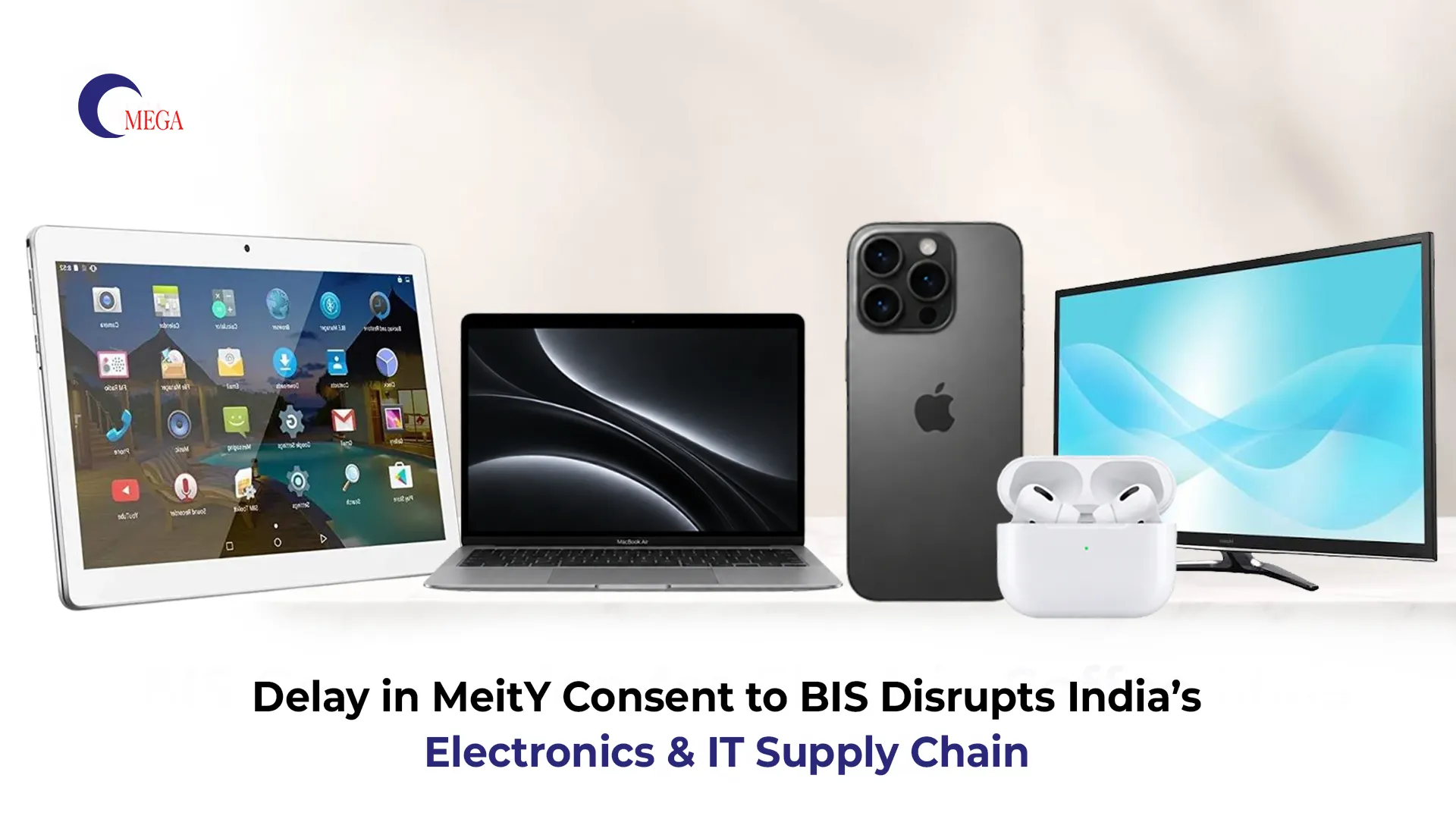
India’s push to become a global electronics manufacturing hub has been accelerating, but a procedural bottleneck is quietly straining the supply chains of companies that source products from China or rely on Chinese ODMs. The culprit: delays in the Ministry of Electronics and Information Technology (MeitY) granting prior consent for BIS registration applications under CRS Scheme-II.
What Is CRS Scheme-II, and Why Does China Trigger an Extra Step?
The Compulsory Registration Scheme (CRS) under BIS mandates that all electronics and IT products sold in India carry the BIS certification mark before they can be placed on the market. Scheme-II of CRS is the pathway for manufacturers who wish to register products tested at BIS-empanelled laboratories or through the BIS-recognised foreign testing framework.
The added complexity arises from India’s geopolitical stance on imports from countries sharing a land border, most significantly China. Under the revised FDI and import regulations, any company that:
- Sources finished electronics products from China
- Has its own factory, or its ODM’s factory, located in China
must obtain prior consent from MeitY before BIS will process the CRS registration application. This is not a formality. MeitY evaluates the application against India’s broader industrial policy objectives, most notably the Make in India mission and the goal of de-risking electronics supply chains from single-country dependencies.
Without this consent, the BIS application simply does not move forward. Products cannot be imported. Timelines collapse. Business plans stall.
The Real Cost of Delay
For companies dependent on Chinese manufacturing, whether through contract manufacturers, JVs or wholly-owned facilities in China, the MeitY consent stage has become an unpredictable waiting period. Consumer electronics, IT peripherals, networking equipment, wearables and smart devices are all caught in this backlog.
Supply Chain Disruption
When consent is delayed, product launches and import schedules slip.
Inventory Risk
Companies commit to inventory planning quarters in advance. A pending consent with no clear timeline forces them to carry uncertainty through procurement, logistics and retail.
Market Opportunity Loss
India’s electronics market is growing rapidly. Every week without registration is a week where competitors, particularly those with domestically manufactured products, hold the floor.
Distributor and Retailer Pressure
Brand owners face escalating queries from trade partners who cannot confirm product availability, eroding commercial relationships.
What MeitY Evaluates, and Why Alignment Matters
MeitY’s review is not arbitrary. The ministry is looking for genuine commitment to India’s manufacturing ecosystem, and companies that can demonstrate this alignment are better positioned to secure timely consent. Key considerations include:
Domestic Value Addition
Does the applicant have any manufacturing, assembly or localisation presence in India, or concrete plans to build one?
Technology Transfer and Skilling
Is the company contributing to building indigenous technical capability?
Make in India Roadmap
Is there a credible, documented phased plan to shift production or sourcing toward India?
Compliance History and Corporate Governance
Is the entity, and its Chinese partner, in good standing?
Companies that approach MeitY with a well-structured, policy-aligned narrative, rather than a bare application, consistently see faster outcomes.
How Omega Helps Navigate This Bottleneck
Omega works with electronics and IT companies at the intersection of regulatory compliance and government relations. Our team has deep experience with BIS CRS procedures and understands the expectations that shape MeitY’s review. Here is how we support clients through the MeitY consent process:
Alignment with Make in India Objectives
We help companies assess and document their current or planned contributions to India’s manufacturing ecosystem, whether through MSME partnerships, PCBA localisation, after-sales and repair infrastructure, or phased domestic production commitments. A credible Make in India narrative is often the single most decisive factor in MeitY’s evaluation.
Application Structuring and Due Diligence
We review the full BIS CRS Scheme-II application package and ensure the MeitY consent request is structured clearly, addresses likely queries upfront, and presents the applicant’s case in the strongest possible light.
Proactive Liaison and Follow-Up
Our team maintains active engagement with the ministry during the review period, anticipating information requests, responding promptly, and ensuring the application does not languish at any stage.
Facilitating Early Consent
For clients with urgent commercial timelines, we work to accelerate the consent process through transparent engagement with stakeholders, while ensuring full compliance with all regulatory requirements.
End-to-End BIS CRS Support
Beyond MeitY consent, we manage the full BIS registration lifecycle, from lab testing and documentation to certification issuance and renewal, so clients have a single point of accountability.
The Bigger Picture: India’s Electronics Ambition Requires Pragmatic Regulation
India’s goal of becoming a $300 billion electronics manufacturing economy by 2026 is ambitious and achievable, but it requires the regulatory architecture to work with industry, not only as a gatekeeping function. MeitY’s consent requirement reflects a legitimate policy interest: ensuring that India’s growing electronics market also builds domestic industrial capacity, rather than simply channelling import demand.
The challenge is implementation. Delays that stretch beyond a few weeks can cumulatively deter the very investment India seeks to attract. Companies that want to participate in India’s electronics growth, including those currently manufacturing in China, need a predictable, timely process that rewards genuine commitment to the Make in India mission.
Until systemic reform accelerates that process, proactive regulatory strategy is the most effective tool available to companies navigating CRS Scheme-II.
Facing MeitY Consent Delays for BIS CRS Registration?
Omega delivers strategic regulatory advisory and government liaison support to keep your electronics supply chain on track.
Get in Touch: If your company is sourcing electronics products from China and requires MeitY prior consent for BIS CRS Scheme-II registration, Omega can help you build the right case and secure timely approval. Contact our regulatory team to discuss your product certification and government liaison needs.
Disclaimer: This article is for informational purposes and does not constitute legal or regulatory advice. Regulatory requirements may change. Companies are advised to seek professional guidance for their specific circumstances.